




![[Slideshow] Senior Prom 2026: A Night to Remember Before Graduation](https://randolphrampage.com/wp-content/uploads/2026/06/Image-70-1200x900.jpeg)
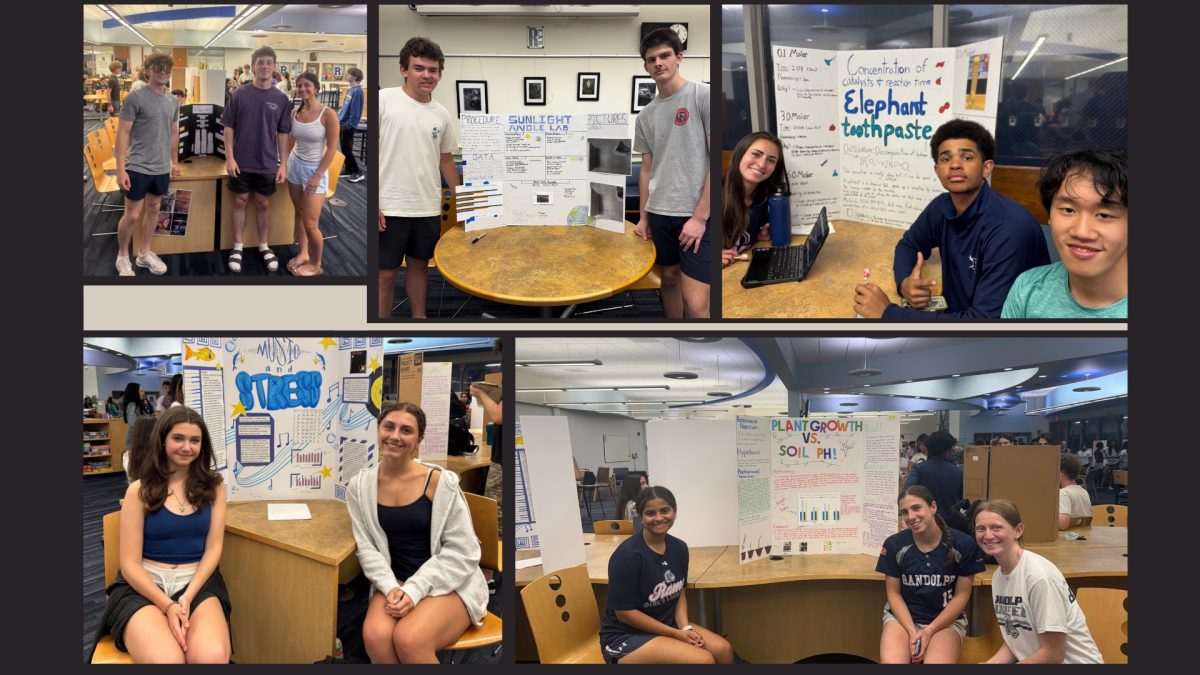




AP Research students presented their final Presentation and Oral Defense (POD), the culmination of a year dedicated to developing independent research projects, from April 15-22.
These approximately 20-minute-long presentations highlighted every stage of their research and enabled students to show off their hard work and contributions to their discipline.
“I couldn’t be prouder of my AP Research class,” English teacher Stephanie Torsiello said. “At the start of our journey together, they made a promise to become a supportive classroom community, and they have truly lived up to that standard. It has been an honor seeing all their hard work come to fruition.”
Here’s a look at some of the presentations.
Nia Bandlamudi: UV Light and High-Traffic Bacteria
Bandlamudi, who has always had an interest in science, formulated her study during the summer.
“The main premise was how UV light impacted microbial growth,” Bandlamudi explained. “I molded my questions to be more school-based.”
Her study focused on how UV light could improve disinfection protocols in schools. While the typical chlorine-based disinfectants are effective, she noted that they become an added expense for educational institutions
To support her research, she worked with science teacher Carlo Maucione, who provided materials and laboratory space for her study.
“I supported her primarily with the experimental setup, offering a few minor recommendations to help ensure the study was conducted rigorously and produced reliable data,” Maucione said.
Siyona Mehta: Faces, Anecdotes and Perceptions of Criminals
Inspired by her interest in law and psychology, Mehta explored how appearance influences perceptions of criminal guilt by measuring facial biases.
“Over the summer I created this idea where I wanted to see how people judged others based on appearance,” Mehta said. “I wanted to see if these developed biases could be changed.”
Her study consisted of two Microsoft Forms assessments: one measuring participants’ initial judgments and the other providing personal anecdotes alongside the same images.
Mehta discovered that participants were more likely to assume someone was guilty before hearing personal context. However, once the anecdotes were factored in, almost all participants shifted their opinions and perceived the criminals as innocent.
Ola Jankowska: Redefining the American Dream
An immigrant herself, Jankowska examined how people define and pursue the American Dream.
“I wanted to focus on studying the ability of them to achieve this dream and how certain factors have formulated their opinion or definition of the American Dream,” Jankowska said.
Living in America motivated her to rethink the concept. By the end of her research, she came up with one final definition:
“[The American Dream is] the ability for any individual, regardless of factors such gender, race or socio-economic class, to pursue and achieve their personal goals through hard work.”
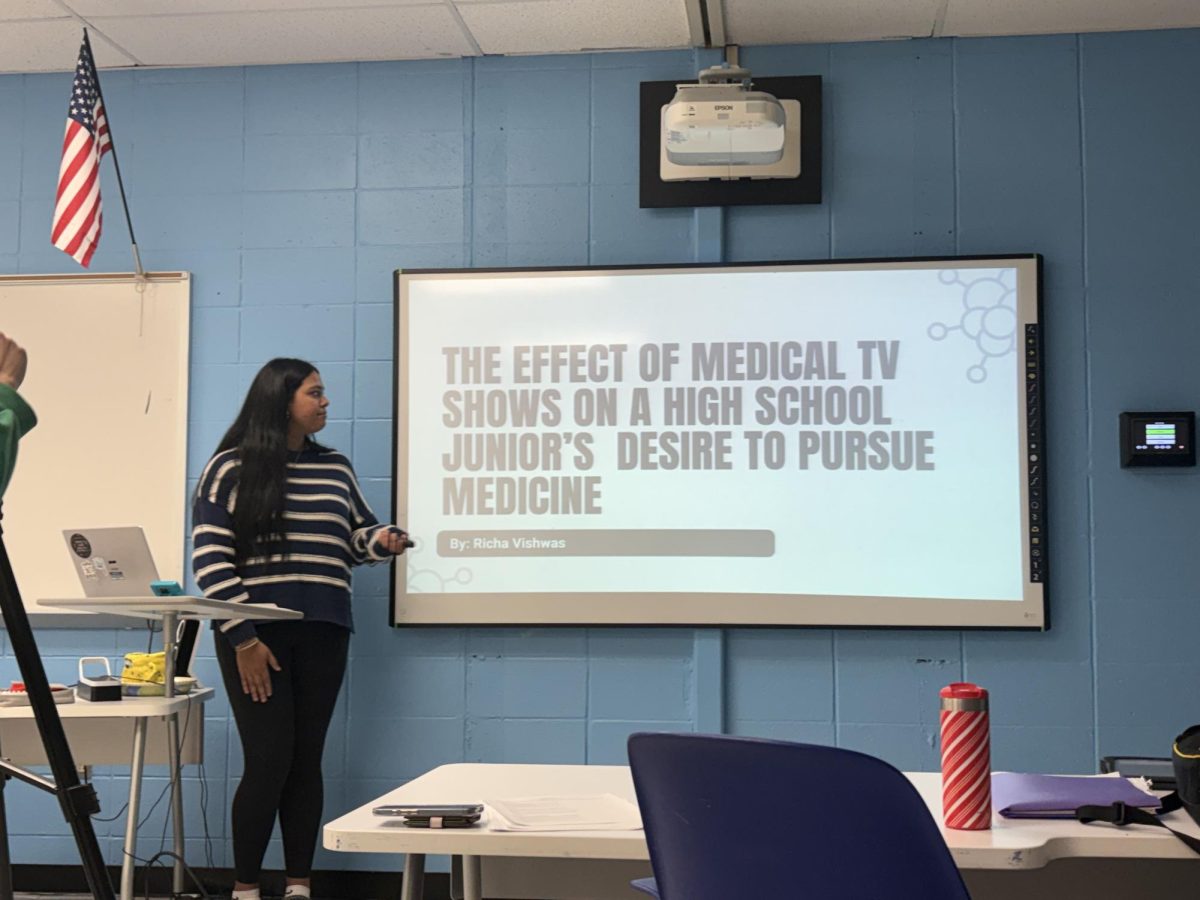
Richa Vishwas: Teenagers’ Willingness to Pursue Medicine
Vishwas based her study on her career plans to work in medicine. She wondered whether media portrayals of healthcare could influence students’ interest in the field.
“I took clips from “Grey’s Anatomy” that featured high-stress situations or medical miracles,” she said. “I had high school juniors take a pre-test to see where they fell. After watching the clips, they took a post-test to see if those answers changed.”
She found that participants had a 12.6% increase in positive responses toward careers in medicine after watching the clips. Vishwas also measured participants’ emotional responses to the clips and found that stress was the most common emotion reported during the viewing experience.
Frankie Cacciacarne: Social Media and Consumerism
Cacciacarne took a different approach, using personal shopping habits and social media use to conduct her study.
“I have a lot of reusable water bottles that I do not use very often,” Cacciacarne said. “And every time I see a new water bottle trending, I immediately want to buy it. I wanted to research how social media could be a part of that because I’m constantly on social media, so I wanted to see if that was just me or other people.”
Her research included multiple surveys and video-based testing. Participants answered questions about their purchasing habits, the number of water bottles they owned, and where they purchased them. They also watched sample “packing my Stanley” videos, a trend popular on social media platforms.
She found that Owala and Stanley were the most common water bottle brands, with many student participants owning more than one of these bottles. She also discovered that participants were more likely to want a water bottle after seeing it featured on social media, though they were less likely to purchase other products from the same brand.
James Ward: Volleyball Stretching and Performance
As a varsity volleyball player, Ward designed his study around athletic performance and stretching techniques.
“I had athletes do preliminary jump testing and flexibility tests,” Ward explained. “And then athletes performed one of three warmup routines: one with dynamic stretching, one partially dynamic with static stretching for the ankle and the other with no stretching at all. Finally, I had them repeat preliminary testing and calculated the increase in performance.”
Ward discovered that neither dynamic stretching nor dynamic stretching while statically stretching calf muscles affected jump height. However, both routines increased ankle flexibility by similar amounts.
Jiah Shah: TikTok and Vocabulary
Shah based her study on her own experiences with TikTok to find out if it harms education. Shah created a study with vocabulary tests, screen-time tracking and interviews.
“My study was created because I use slang a lot when talking,” Shah said. “But I saw some of my peers using it in their essays. This study tested how much social media influences the vocabulary we use to write an essay or in any English classes.”
Her findings suggested that excessive TikTok use can negatively impact vocabulary development. In addition, the AP students she tested generally performed better on vocabulary tests but also reported lower average screen times. Also, students with higher screen times most often reported spending less time on homework, creating lower test scores.