












![[Slideshow] Senior Prom 2026: A Night to Remember Before Graduation](https://randolphrampage.com/wp-content/uploads/2026/06/Image-70-1200x900.jpeg)







“Scott! Scott!”
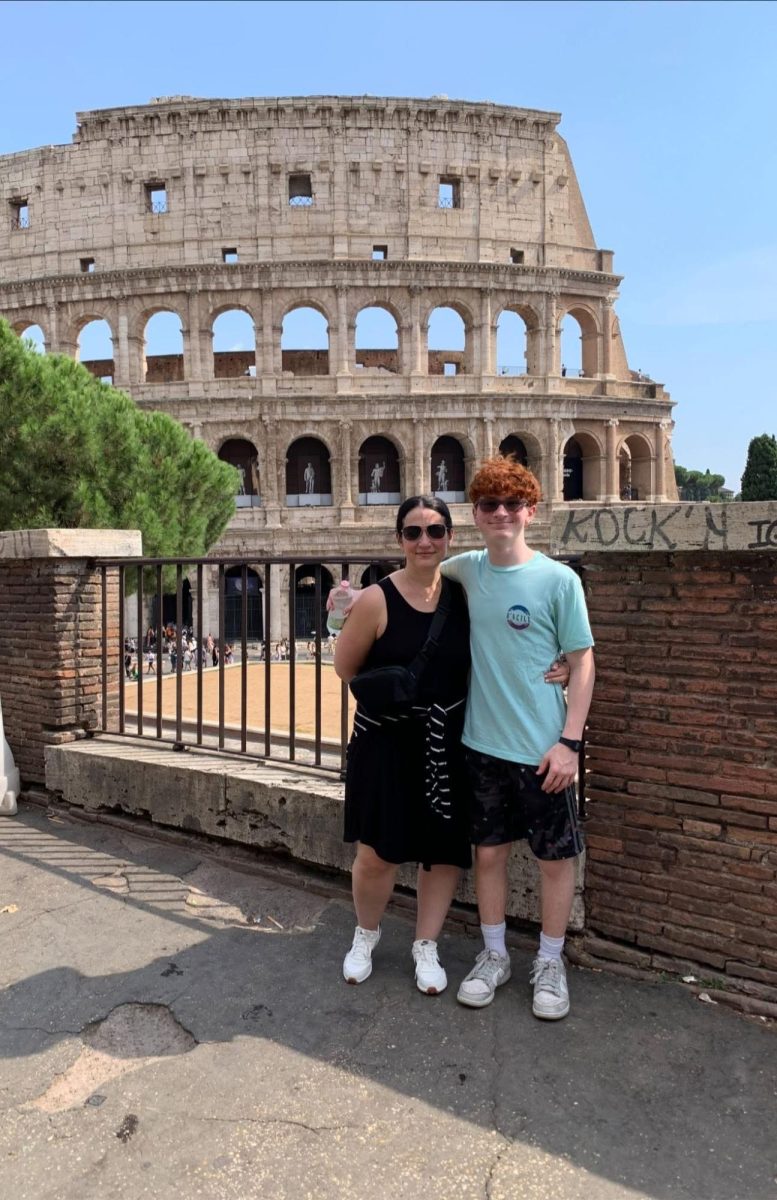
It’s not unusual for my mom to be loud. As a lawyer, she deals with clients all the time who respond best to a certain, well, increase in decibel level. But when I heard her scream my dad’s name, I knew this time was different.
I shot up from reading on the couch and nearly tripped running up the stairs to the office where she was working. I found her out of her desk chair, lying on the floor, clutching her lower back. I honestly couldn’t tell you what she said, but it was something along of the lines of, “I can’t breathe; get Dad.”
The EMTs arrived within 10 minutes, loaded her into the back of an ambulance and sped off. My dad and I sat in the living room in silence afterward, trying to process what had just happened. We had no idea if she was going to be okay.
We would soon learn that my mom had suffered a pulmonary embolism (PE), a blood clot in her lung. According to the National Library of Medicine, more than 100,000 people in the United States die annually from pulmonary embolisms, and over 900,000 more are affected by them.
This isn’t a one-and-done condition. A pulmonary embolism can recur after the initial clot. In fact, 33% of people who experience a deep vein thrombosis or a pulmonary embolism will have another within 10 years, according to The American Lung Association. After 10 years, the odds increase to 40%.
I distinctly remember the first night she was in the hospital; COVID still loomed, and visitation was limited, so only my dad was allowed inside. Instead of entering the building with him, I was forced to sit outside on a bench, watching strangers come and go through the hospital doors until my dad was finally one of them.
When he returned, my dad explained that she had been put into in a small, dark, windowless room. She was stable but confused and somewhat disorientated. The doctors had no answer as to what had happened to her. The only thing the doctors told us were “could haves,” such as, “she could have had a heart attack” or “she could have had a stroke.” None of them sounded reassuring to me and my dad. That night, we returned home at 11 p.m., tired and with neither answers nor comfort.
“I was extremely worried that she was going to die,” my dad recalled recently. “Thoughts flashed through my mind—about her not being able to see you get your driver’s license, graduate from college, or get married—and of course, about losing my partner.”
I had a frightening thought of my own: What would have happened if I hadn’t decided to read in the family room that July afternoon? It’s not that I don’t enjoy reading, but I spend most of my time in our basement, playing Xbox with friends. That day, instead of gaming, I decided to be productive and read on the couch. That choice allowed me to hear my mom screaming for help. If I had been downstairs, she might not be here today.
My mom came home from the hospital three days later, better but weak. She had survived, and that was what mattered most at the time. According to the verywellhealth.com article, How Long Before a Pulmonary Embolism Turns Fatal, a pulmonary embolism can become deadly within minutes. My mom had been in severe pain for no more than three minutes before 911 was called, but if it were any longer, her outcome could have been much worse.
Her life, however, will never truly be the same. The long-term physical effects of a PE can be severe, including chronic fatigue, shortness of breath and chest pain, The emotional effects can be even more detrimental. “There is a fear now, that at any point in time, my body could decide to create another clot, which could kill me,” my mom said.
Several years have passed since my mom’s embolism, giving my family time to reflect.
My mom now realizes she had misunderstood the warning signs. In the weeks leading up to the embolism, she had been plagued by back pain, shortness of breath and drowsiness but dismissed these symptoms to simply being tired or worn out. In reality, her symptoms were far more serious; her incorrect presumption nearly cost her her life.
“The pain was nothing like anything I’ve ever felt before,” she recently recalled. “Being alone in the ambulance, especially because it was still COVID, was scary, and the uncertainty of not knowing what was wrong with me was overwhelming.” In the years after, her symptoms have dissipated and she no longer experiences them.
As for me, I’ve learned how fleeting life can be and how everything can change in an instant. Friedrich Nietzsche calls it “amor fati,” the love of fate. I try to live by that idea now, appreciating what the world offers me, especially my parents, pets and friends. I laugh with the people I love and make as many memories as I can.
There is always the chance my mom could have another clot, but she refuses to live in fear. Instead, she radiates an optimism and zest for life I strive to emulate. “The whole experience has made me that much more grateful to be alive,” she said, “so that I can cherish all of the experiences I am having, rather than those I might have missed.”