












![[Slideshow] Senior Prom 2026: A Night to Remember Before Graduation](https://randolphrampage.com/wp-content/uploads/2026/06/Image-70-1200x900.jpeg)










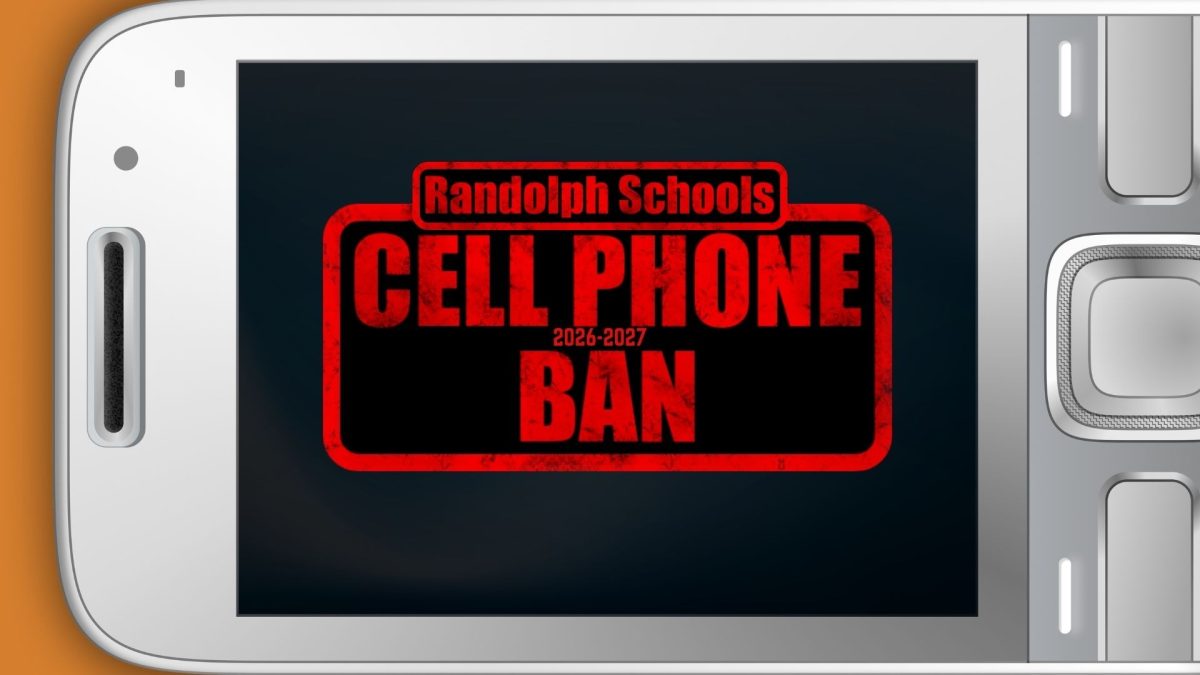
Following former N.J. Gov. Phil Murphy’s “bell-to-bell” cell phone ban, signed into law on Jan. 8, RHS has formed two policy committees to determine how the mandate will be implemented locally.
One committee consists of Board of Education members and administrators, while the other is teacher-run. Together, the groups will develop recommendations for how the ban should be enforced at RHS and across the district.
“When new policies come out, board members send them to administrators,” RHS Principal Jessica Baxter said. “It’s my job as principal to collect feedback from my staff and admin. team. Then we give recommendations back to the board, but ultimately, it is the Board of Ed. and that policy committee who determine what goes into the policy.”
The law, which takes effect in the 2026-27 school year, aims to reduce distractions, improve attention and classroom engagement and support students’ mental health. A “bell-to-bell” ban generally prohibits student use of cell phones and internet-enabled devices, such as smartwatches and AirPods, throughout the entire school day, from 7:30 a.m. to 2:30 p.m. at RHS. This would include lunch, passing time and breaks.
However, despite the label, the law allows flexibility in how districts implement the policy. Policies can range from a full ban, like the one at Ramsey High School, to lighter restrictions, such as banning phones only during instructional time while allowing use during lunch or free periods.
In short, districts must adopt a phone policy that follows the guidelines of the law, but schools are not required to implement a system as strict as Ramsey’s.
“The purpose of the committee is to ensure that Randolph’s policy aligns with the new law,” teacher and committee member Sandra Kessell said.
Murphy signed the bill at Ramsey High School, one of the first schools in New Jersey to institute a phone ban policy and a model for the legislation. At Ramsey, students place their phones in Yondr pouches when they enter the building and cannot access them until dismissal.
“With today’s bill signing, we are ensuring New Jersey schools are a place for learning and engagement, not distracting screens that detract from academic performance,” Murphy said at the Jan. 8 signing, according to NJ.gov.
Still, RHS administrators suggest the district may not adopt such strict measures.
“I don’t know that at the high school we need pouches or for kids to turn in their phones,” Baxter said. “If we have a strong policy and clearly communicate our code of conduct and expectation that phones should be out of sight, I think that’s probably where we’ll go.”
New Jersey is now the 37th state to enact some form of school cell phone restriction, reflecting growing momentum since Florida passed a similar law in 2023.
The issue has become a major topic of debate among faculty and students.
Supporters of stricter policies argue that removing phones from classrooms can improve students’ mental health and academic performance while reducing stress.
“I think the phone ban is going to prove to be very beneficial,” Social Studies Teacher Jacob Torsiello said. “Phones are a constant distraction, and during school hours is no exception. I think phone notifications can be predatory to students’ attention and mental health, and phones get in the way of true relationship-building in school.”
Opponents, however, argue that a full-day ban, especially during lunch or free periods, is excessive. Some also stress the importance of parents being able to quickly contact their children in emergencies without going through the school office.
“Over the past years, there have been numerous tragic events,” sophomore Layla Tavares said. “And the most crucial aspect is direct communication between students and parents.”
Many teachers and students fall somewhere in between, supporting limits during instructional time but opposing a complete ban.
“I have had a cell phone policy since we became a one-to-one district due to COVID,” Kessell said. “I began by having students place cell phones in their backpacks and would give a lunch detention if they did not comply. For the most part, I did not have any issues.”
“A year ago, I bought a wooden holder and now have the students place their phones in there at the start of the period,” she added. “Do a few keep their phones in their pocket for various reasons? Yes. However, we have an understanding that it stays there—respect for me and what I want in my classroom environment.”
Many students said they prefer the current system to a complete ban.
“I definitely don’t think phones should be outright banned, but there should be some restrictions during class,” junior Drew Milberg said. “A lot of kids get distracted on their phones, and it shows in their grades.”
“I like how the policy is now,” freshman Zachery Wysmierski added. “Teachers can take cell phones if they’re out during class, but students should still be able to have them.”
With the policy set to take effect in the 2026-27 school year, some level of restriction is inevitable, though the exact approach has yet to be determined.
“I would love to be able to say, ‘I don’t want to see phones.’ With a first offense policy, that hopefully will abate it,’” Baxter said. “If there’s an issue, then you start thinking about pouches, but I don’t want to get to that.”
“We’re a high school; I think people can be responsible,” she added. “I’ve seen teachers collect cell phones, and I’ve seen it work really well. I think we’re going to end up landing somewhere where it makes sense—and most people will find it reasonable.”
The district has not yet announced when the final policy will be released, but officials say it will be communicated to staff, students and families once the Board of Education reaches a decision.


Jared Goldschmidt • Apr 16, 2026 at 12:12 pm
This was a really well written article! I liked all of the quotes in it and how it took perspectives of students and adults from both opinions. I also liked how informational it was, like when you stated that schools like Ramsey have a full ban, but it is truly up to the board in Randolph to make the decision. Nice job.