







![[Slideshow] Senior Prom 2026: A Night to Remember Before Graduation](https://randolphrampage.com/wp-content/uploads/2026/06/Image-70-1200x900.jpeg)
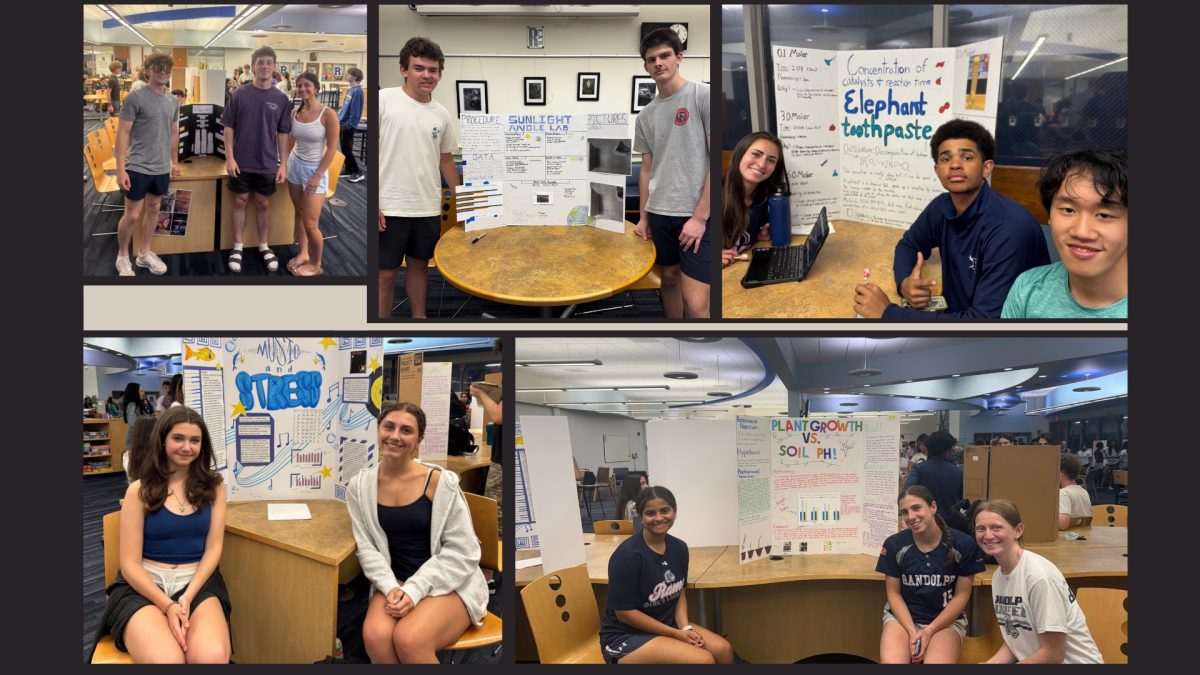









The National Social Studies Honor Society (NSSHS) of RHS successfully hosted its Red, White, & Jersey historical showcase at the high school on March 4 and 5, 2026.
Held in tribute to the upcoming 250th anniversary of the United States, the event featured 33 student-crafted displays highlighting historic sites throughout New Jersey.
The two-day showcase opened with a community open house on March 4, where Morris Country Assemblywoman Aura Dunn presented a proclamation recognizing the RHS chapter of NSSHS for hosting the event and honoring New Jersey’s role in American history. On March 5, the exhibit continued with a full-day open house for RHS students to enjoy.
RHS teachers and faculty voted on their favorite presentations. The three winning presentations were:
- The Botto House—Paterson Silk Strike, by juniors Abby Bentley, Brynne Hunter and Manny Piccolo
- The Morris Canal, by juniors Jeovanny Campos, Libby Cooper and Caroline Crane
- The Weehawken Dueling Grounds, by juniors Brielle Nuzzo and Finley Rantas.
Three additional projects received notable mentions:
- The Woman’s Club of Morristown, by seniors Jamie Donnelly, Emma Maqsudi and Arianna Nunez
- Hinchliffe Stadium, by seniors Seannah Parsons and Lilah Willis
- The Monmouth Battlefield, by juniors Jasmine Abdelnaser and Katie Wissen
Below is a roundup of several noteworthy presentations featured at the two-day event.
The Dawn at Weehawken
Juniors Finley Rantas and Brielle Nuzzo presented on The Dawn at Weehawken, famous as a dueling ground between 1700 and 1884. One of the most famous duels that occurred there was between political rivals Alexander Hamilton and Aaron Burr, where Hamilton was fatally shot by Burr. Dueling parties would eventually make up either by writing letters or face-to-face at the duel. “Dueling was about keeping your honor,” Nuzzo said. Today, the historic site in Weehawken remains open to visitors. For more information click here.–Emma Addison
Sterling Hill Mine
Juniors Kayla Hudak and Ola Jankowska presented on the historic Sterling Hill Mine in Ogdensburg. The world-renowned zinc mine operated for over 247 years before closing in 1986. During wartime, the zinc extracted there was used to produce ammunition and military equipment. The mine reaches 25 levels underground and its tunnels span 35 miles. Today, the mine is best known for its bright fluorescent rocks, which glow brightly under ultraviolet light. “I am grateful for the opportunity to educate people about the historical sites in New Jersey,” Jankowska said. For information on how to visit the Sterling Hill Mining Museum, click here. –Natalie Crespolini
Randolph Friends Meeting House
The Randolph Friends Meeting House, the oldest structure in Randolph and one of the oldest in Morris County, was the focus of a trifold presentation by juniors Ryan Walsh, Jack Novak and Mark Hurley. Back in the 18th century, the house was a meeting place for local Quakers who had migrated from Massachusetts after facing persecution from Puritans for their abolitionist and anti-revolution ideals. These Quakers believed in a simplistic, peaceful lifestyle centered on faith. Hartshorne Fitz Randolph, a prominent member of the community at the time, is the namesake of Randolph. “The Quakers are one of the most influential but unknown groups in America,” Walsh said. For more information, click here. –Anthony Helmstetter
Cannon Ball House
Juniors Valeria Reynaldo and Stephanie Weng presented on the historic Cannon Ball House, located in Springfield. One of only four structures to survive the Revolutionary War’s Battle of Springfield, it continues to stand as a testament to American history and now operates as a museum displaying artifacts from the Revolutionary and Civil War eras. The well-preserved structure, named after a cannonball lodged in its western wall, offers a unique glimpse into the past. “We want people to see the value of historical studies, the history behind this place,” Reynaldo said. For more information click here. –Melany Martinez
Thomas Edison National Historical Park
The Thomas Edison National Historical Park in West Orange preserves the home and workplace of famed inventor and scientist Thomas Edison. The site has seven buildings, highlighted by his 29-room mansion and laboratory complex. The trifold presentation by juniors Ben Frick, Ryan Shin and Brayden Hendrickson explored his intense work life and massive office, where records of his 2,332 patents were stored. The display also highlighted many of his inventions, like the kinescope, phonograph and Black Maria, one of the first film studios, along with his most famous invention, the light bulb. “I think it’s important because of the genres he spanned and the impact of his innovations,” Frick said. For more information click here. –Zachary McDaniel
Morris Canal
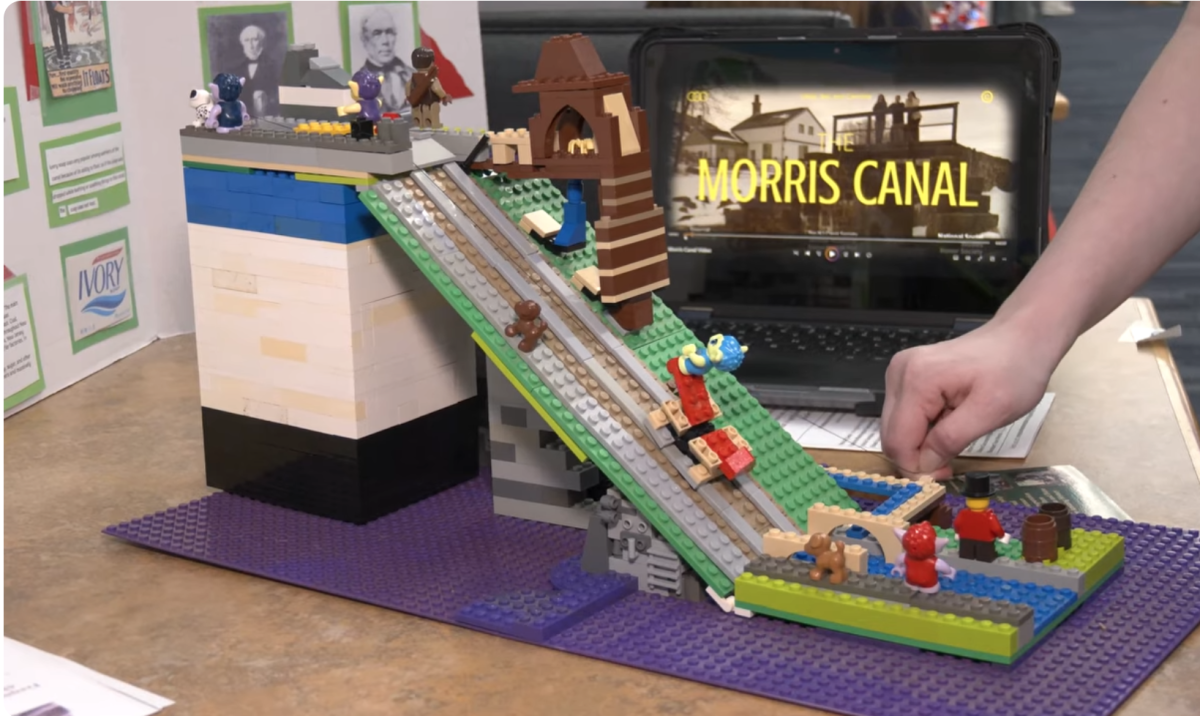
The Morris Canal is a 102-mile-long canal that spans from Phillipsburg to Jersey City. It was originally constructed by the Morris Canal & Banking Company to ship goods like coal and iron across northern New Jersey. The trifold display, made by juniors Libby Cooper, Caroline Crane and Jovanny Campos, was extremely well made and covered plenty of details. They even incorporated an impressive LEGO model of the canal’s incline plane and Scotch turbine, which worked together to help carry boats up the canal’s extreme elevation changes. “You don’t think about how much history is around us and how its shaped North Jersey,” Crane said. For more information click here. –Zachary McDaniel
The Hermitage
Seniors Reina Daniel, Lauren Kuridza and Kate Ellermeyer presented on The Hermitage, a historic home that conveys an important part of New Jersey’s past. Built around 1760, the home was used throughout the American Revolutionary War and even served as a base for British soldiers. Later, it became the residence of the Rosencrantz family, who expanded and reconstructed the home in the 1800s. Daniel explained the site’s historical significance, saying, “The Hermitage helps people understand how important New Jersey was during the Revolutionary War.” The Hermitage is also remembered as a place where Aaron Burr once stayed as a guest. Today, it is a museum where visitors can explore local history and how people lived in New Jersey centuries ago. For more information click here. –Devyn Meyers
Rockingham Historic Site
Seniors Reina Emdur, Kayla Takacs and Siyona Agrawal covered the Rockingham Historic Site, an important home linked to the end of the American Revolutionary War. Built around 1710, the home later became well known when George Washington used it as his last warfare base in 1783. During his stay there, Washington wrote important letters and prepared to resign as leader of the Continental Army following the war. “Rockingham is important because it is where Washington made final decisions before returning to civilian life,” Emdur explained. Nowadays, Rockingham is protected as a historic site where visitors can learn about New Jersey’s role in the Revolution. For more information click here. –Devyn Meyers
The Woman’s Club of Morristown
Seniors Jamie Donnelly, Emma Maqsudi and Arianna Nunez presented a trifold on the Woman’s Club of Morristown. The club operates out of the Dr. Lewis Condict House, which was built in 1797. The house was used by the Red Cross during World War I, and it was later sold to two sisters who converted it into a woman’s boarding home. Due to a boarding home controversy, they later turned it into a clubhouse. The club has operated for over 110 years as a nonprofit organization to empower women through community activities and partnerships with outside organizations. “It’s really interesting that they are still continuing to provide for their community, which is different from a lot of other people’s historical sites because most aren’t active anymore,” Donnelly said. For more information click here. –Arianna Nunez
Morris County Courthouse
Juniors Jackson Stein and Ethan Dougherty presented a trifold on the Morris County Courthouse, explaining its historical and civic significance. The well-designed display featured photographs of the courthouse and explanations of its history and role in the community. The trifold described how the Morris County Courthouse, located in Morristown, is the main courthouse for the county. Built in 1827, the building is almost 200 years old. The courthouse symbolizes civil justice in Morris County and handles most of the legal cases in our county each year. “It is important as it has been the head of civil justice in our county for 200 years,” Stein said. For more information click here. –Jake Shuster
The Deserted Village of Feltville/Glenside Park
Junior Julia Vitale and senior Andrew Walker presented the trifold for The Deserted Village of Feltville/Glenside Park, which is located in Berkley Heights. Their display featured images and historical facts about the landmark, along with a popsicle-stick replica of a cottage. The land was originally owned by Peter Willcocks, a lumberman who cleared the area for his family estate. More than a century later, in 1845, the land was bought by David Felt, who renamed it Feltville. Felt built a factory and cottages for his workers on the site. By the 1870s, however, the factory had deteriorated, and many residents left, leaving the village deserted. In 1882, Warren Ackerman bought the property and converted the former mill town into a summer resort named Glenside Park. Unfortunately, the Great Depression slowed down the summer resort business, and the village became abandoned for a second time in 1916. Soon after the Union County Park System was formed in 1921, this area was incorporated into the Watchung Reservation. For more information click here. –Dolan Vogel
The Alice Paul Center
Seniors Ashley Silvestri and Jessica Leonard presented a project on The Alice Paul Center, the childhood home of suffragist Alice Paul. Located in Mount Laurel, Paul often returned to the home as an adult to rest and reflect. Paul was an influential sociologist and feminist activist during the early 1900s. She fought passionately for women’s rights, getting sent to jail twice while leading suffrage protests. She also contributed to the passage of the 19th Amendment, which granted women the right to vote. “Alice Paul did wondrous work for the women of society, and by preserving her home, we’re able to treasure the legacy she holds within the lives of women,” Silvestri said. For more information, click here. –Greyson Walsh